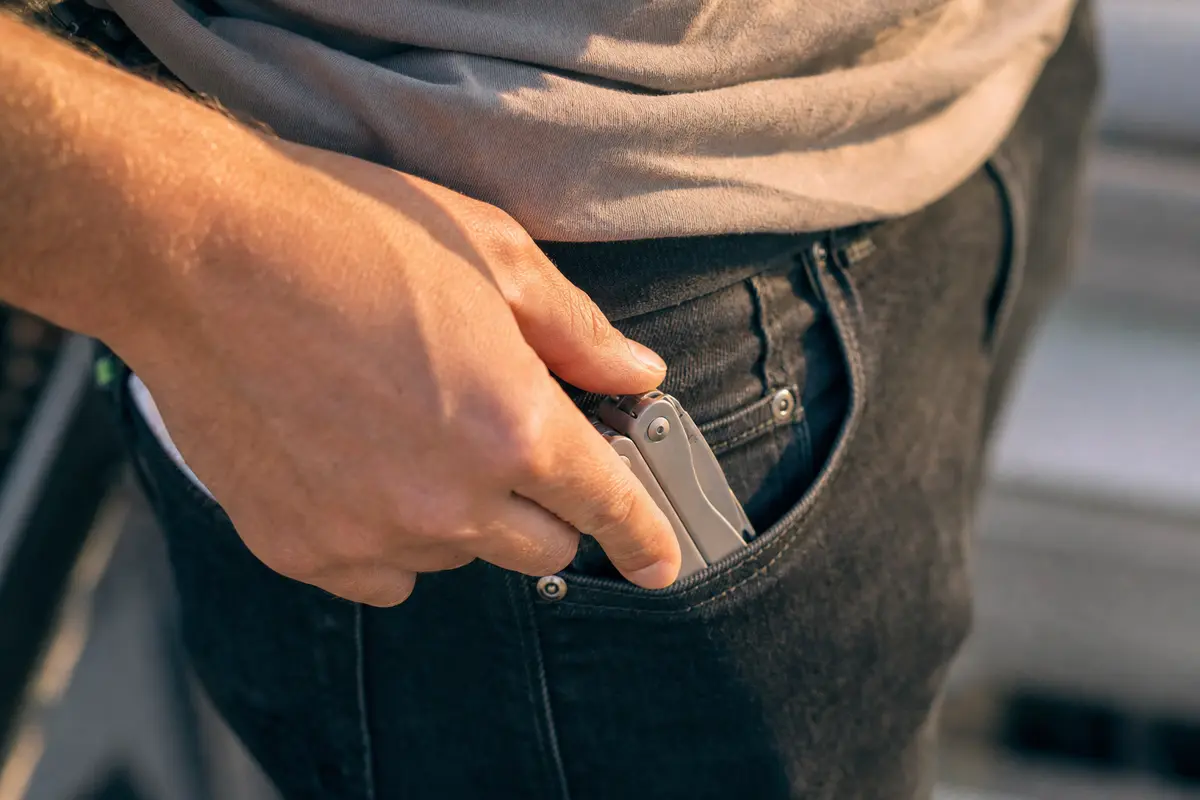
How to Test if Your Gear is Actually Pocket-Friendly
Every gear enthusiast has a drawer. The Drawer of Good Intentions. Full of tools that looked perfect online but lasted two days in actual pocket rotation before getting benched.
The problem is almost never quality. It's comfort. And the fix is almost never "buy different gear." It's usually a $10 clip, a pocket slip, or just putting the thing in a different pocket.
Here are five tests to figure out what's wrong — and how to actually fix it.
The Sit Test
Put the item in your intended pocket. Sit down in your car. Sit at your desk. Sit on a bar stool.
Pass: You forget it's there. Fail: It jabs your thigh, pokes your hip, or shifts uncomfortably every time you change position.
This is the #1 reason gear gets abandoned. If it hurts to sit with, you won't carry it past day three.
Fix it
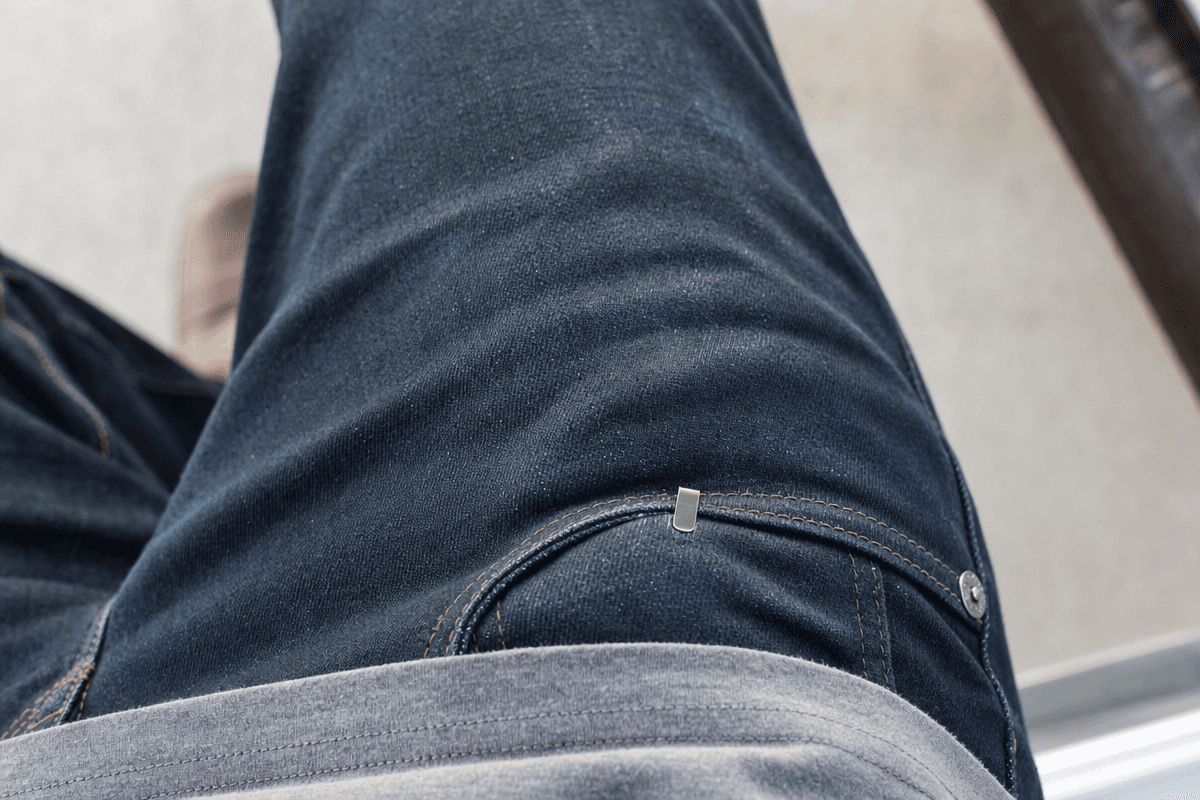
Swap to a deep carry clip. Most pocket knives ship with a clip that leaves half the handle sticking out above the pocket line. That exposed handle is what jabs your thigh when you sit. Aftermarket deep carry clips sit the tool an inch deeper — flush with or below the pocket edge. It's a 5-minute swap with a Torx driver and it completely changes how a knife carries. KnifeJoy has a solid guide to pocket clip types, and Aimfront covers the deep carry options specifically.
Change pocket position. Front-right pocket is the default, but it's not always the answer. Flashlights ride better clipped to the coin pocket — they're short enough to stay below the pocket line. Knives go clip-side in the dominant hand pocket. If you're carrying both, the knife gets the main pocket and the light gets the coin pocket. No negotiation.
If the tool has hot spots — sharp jimping, aggressive texturing, edges that dig in — that's a design flaw, not a carry problem. No clip or pocket position fixes bad ergonomics. Move on to a different tool.
The Reach Test
Without looking, reach into your pocket and grab the item. Now do it with cold hands. Now do it while holding something in your other hand.
Pass: You can locate it, orient it, and deploy it in one smooth motion. Fail: You're fishing around, pulling out the wrong item, or needing two hands to find it.
Your carry should be instinctive. If you have to dig for it, the item is too deep, too similar to other pocket contents, or in the wrong position.
Fix it
Get a suspension clip. The TEC Accessories P-7 Suspension Clip (~$10) hooks over the top edge of your pocket so your tool hangs at a consistent height instead of sinking to the bottom. You always know exactly where it is and how deep. This is one of those things that sounds dumb until you try it.
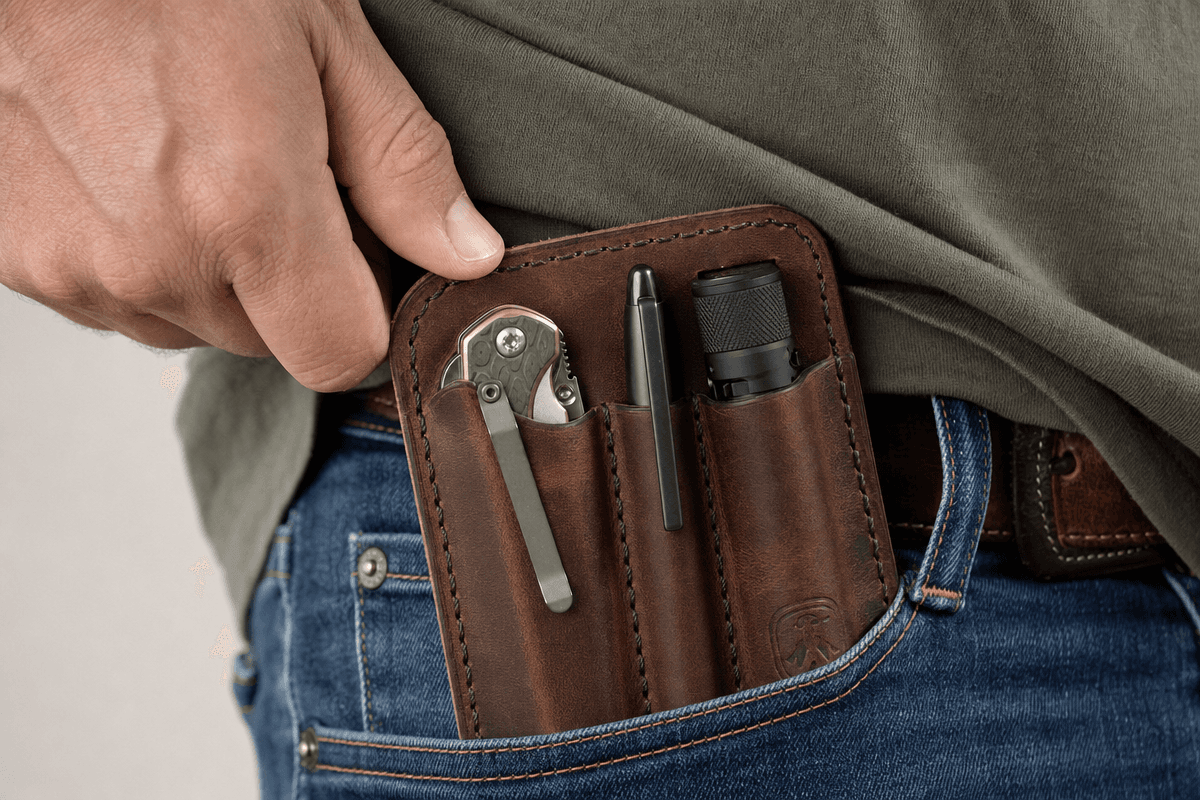
Use a pocket slip. Hitch & Timber makes leather pocket slips — the Pocket Runt and Big Runt are the popular ones — that hold a knife, pen, and light in a single sleeve. Everything stays oriented the same way every time. You reach in, grab the slip, and pull out exactly what you need. No fishing.
Budget option: nylon pocket organizers. The Viperade VE1 does the same job as a leather slip for a fraction of the price. Maxpedition makes good ones too. The r/EDC community has been recommending these for years and they're right — they work.
The Forget Test
Carry the item for three full days. On day three, ask yourself: "Did I notice it was there?"
Pass: You genuinely forgot about it until you needed it. Fail: You were adjusting it, moving it between pockets, or thinking about leaving it home.
The best pocket gear disappears. You only remember it exists when you reach for it.
Fix it
If you notice it, either it's too heavy for that pocket or it's riding wrong.
Redistribute weight. Heavy items pooling at the bottom of your pocket is what makes them noticeable. A suspension clip distributes the weight along the pocket edge instead. Or move the heavy item out of the pocket entirely — a Maxpedition mini belt pouch keeps a multitool accessible without the pocket drag.
Downsize. Sometimes the answer is just a smaller tool. If a full-size multitool bugs you, a Victorinox Classic SD or Gerber Dime does 80% of the work at a third of the weight. The best tool is the one you actually carry.
The Print Test
Wear your normal clothes (not cargo pants — those don't count). Look in a mirror. Can you see the outline of the item through your pants?
Pass: No visible bulge or outline. Your pants look normal. Fail: There's an obvious rectangular lump on your thigh. People are going to ask what's in your pocket.
Fix it
Deep carry clips, again. This is their other superpower. When the knife sits below the pocket line, there's nothing to print against the fabric. The clip is basically invisible.
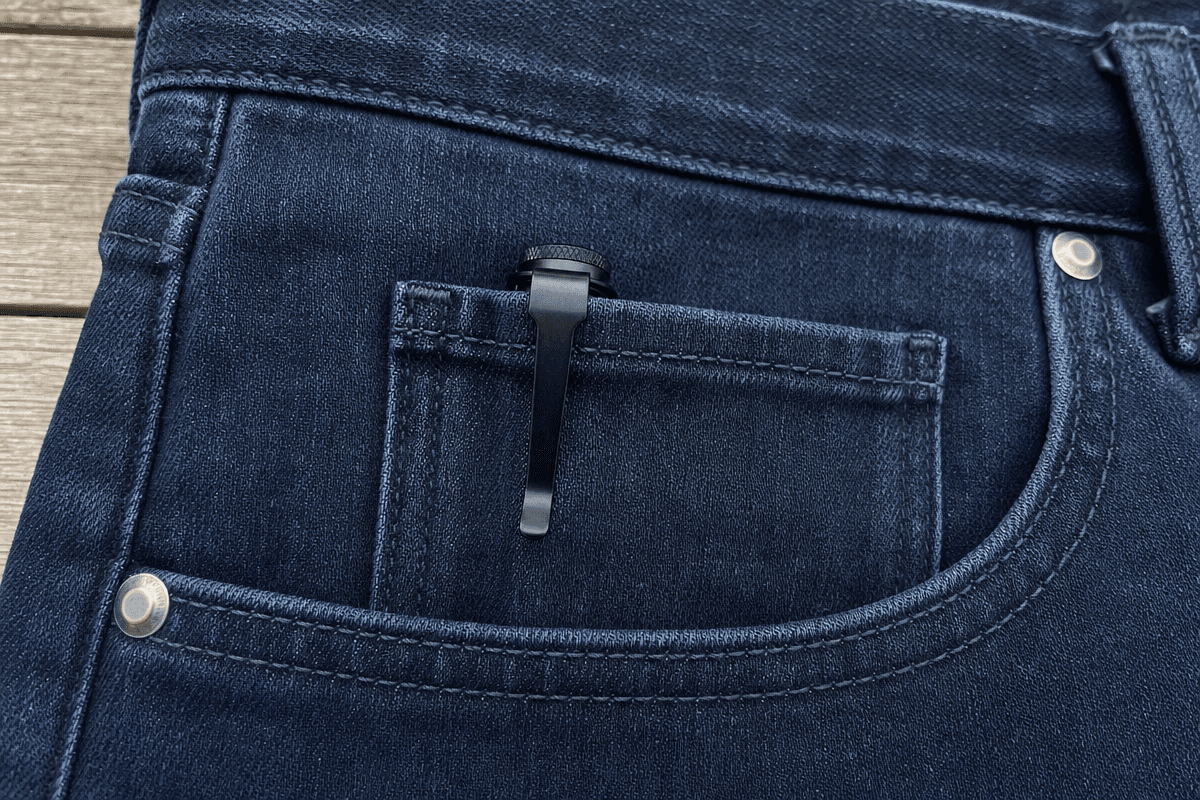
Use the coin pocket. That tiny 5th pocket on your jeans isn't decorative. A small flashlight like the Olight i3T 2 EOS disappears in there completely. Keys too. Anything short and slim — coin pocket.
Carry slimmer gear. Sometimes the fix is admitting that a Leatherman Wave is a lot of tool for slim-fit chinos. A Victorinox Classic SD handles most daily tasks and prints about as much as a pack of gum. Match the tool to the pants, not the other way around.
The Noise Test
Walk normally for 30 seconds. Up stairs. Across a room. Sit down and stand up.
Pass: Silent. No clicking, no rattling, no metal-on-metal. Fail: You hear it on every step. Other people might hear it too.
Noisy gear means something isn't secured — and it's also getting scratched up in there.
Fix it
Leather pocket slips. This is literally what they're for. A Hitch & Timber slip separates your knife from your flashlight from your pen. No metal-on-metal contact, no rattling, no scratches.
Kydex sheaths. Snap-fit sheaths silence fixed blades and some folders. Clip & Carry makes universal-fit kydex sheaths for most popular tools.
The coin pocket trick. Keys in the coin pocket, everything else in the main pocket. Instant silence. This alone solves 90% of pocket noise.
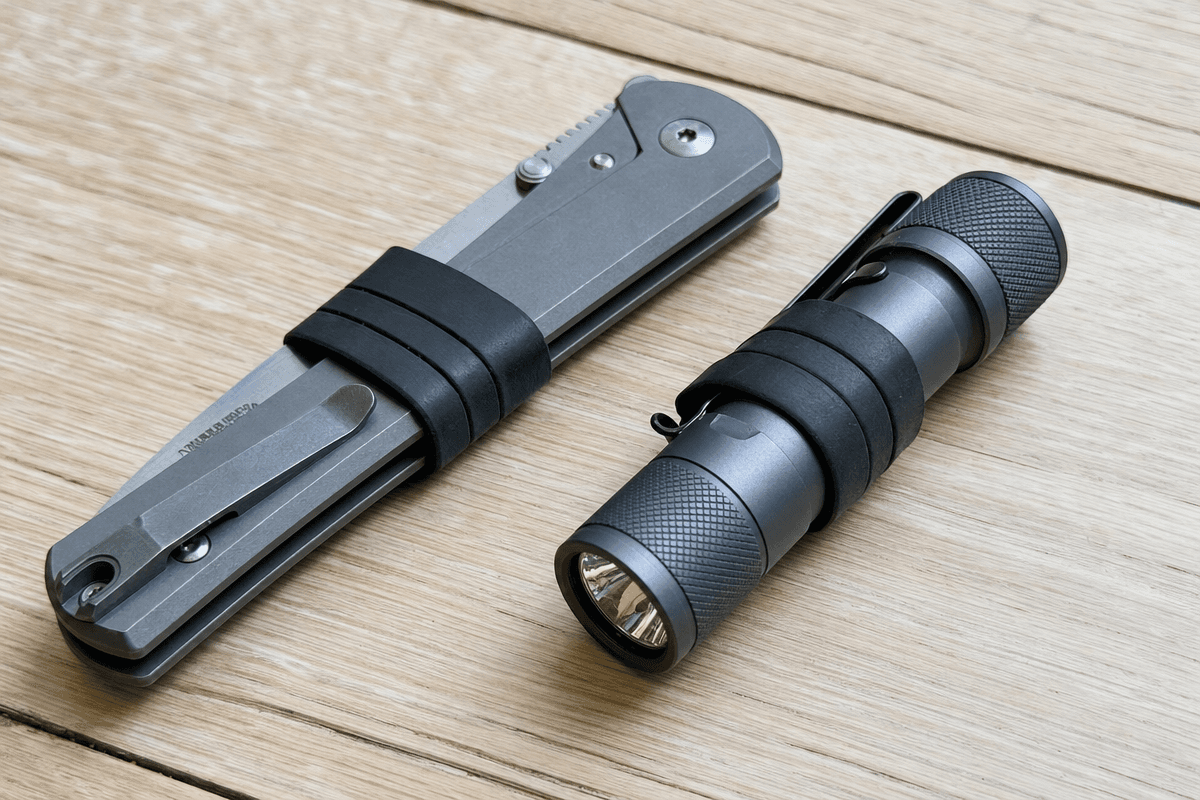
Ranger bands. Cut a bicycle inner tube into half-inch strips and wrap them around your tools. Free, adds grip, prevents rattling. This is the oldest EDC hack in the book and it still works better than most purpose-built solutions.

